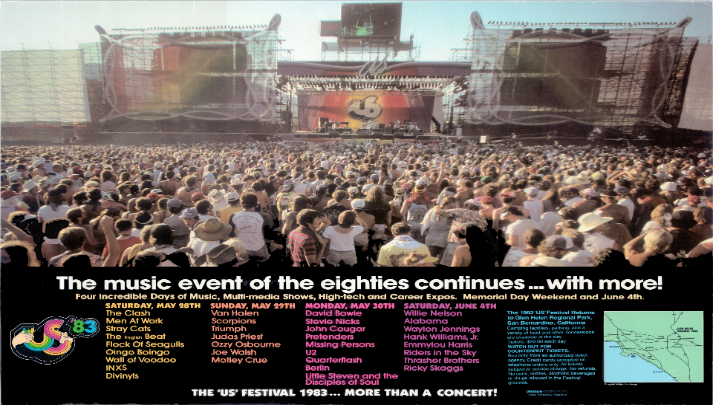
File this under "Shameless Self-Promotion."
No, I'm not changing my name - that's just a typo on the poster. I've seen worse.
For more information and directions, go to: themenurestaurant.com/events

File this under "Shameless Self-Promotion."
No, I'm not changing my name - that's just a typo on the poster. I've seen worse.
For more information and directions, go to: themenurestaurant.com/events

This weekend is Barflies.net's, the website, 11th Birthday.
Happy Birthday to us!
In internet years, I think that makes us about 97 years old... ;oD
Thurs 01.28.10 - This weekend is Alex's Bar's 10th Anniversary weekend, in celebration Alex and I (Ms. Jen) did the above video to cover what the article in The District did not and for Alex to extend a big Thank You to all of the folks who have made 10 Years of Alex's Bar possible.
Alex's has a great line up of shows to say 'Thank you, Long Beach, for a great decade of Alex's Bar!':
Fri, Jan 29, 2010 - Alex's Bar 10 Year Anniversary Show - The Adolescents, Riverboat Gamblers, John Doe, Blockage - $15
Sat, Jan 30, 2010 - Alex's Bar 10 Year Anniversary Show - Riverboat Gamblers, Throw Rag, Mike Watt and the Secondmen, Werewolf - $15
See you at Alex's Bar's this weekend!

The Sasquatch is an enduring staple of American folklore. This fabled ape-man, believed to live in remote forested areas of western North America, has been an object of fascination for centuries. There have been countless reported sightings and a few blurry pictures taken of the reclusive beast, but its existence has not yet been proven. The most common items offered as evidence of Sasquatch are plaster casts of large human-like footprints allegedly left by the creatures. The twenty-four-inch-long footprints inspired the legendary creature's nickname of "Bigfoot." Since it is highly unlikely that you or I will chance upon actual Sasquatch tracks while taking a casual hike in the woods, it would be much easier to simply make your own plaster casts of Bigfoot prints at home.
Why make casts of fake Sasquatch prints? Personally, I enjoy the aesthetic properties of plaster casts and appreciate them as decorative art. To me, their lack of authenticity does not detract from their rough-hewn beauty. It is true that many well-known masterpieces of classical Greek sculpture displayed in museums are actually later Roman copies of long-lost original Greek statues. Only through reverently produced Roman copies, made years after the Classical Greek period, can we appreciate these fine examples of the Classical Greek style. I believe the same standard can be applied to Bigfoot casts. Even if the casts are not authentic, we can still use them to imagine the magnificence of the mighty Sasquatch. Although the creation of many Bigfoot casts may have been motivated by the desire to defraud and deceive, I choose to admire the ingenuity and creativity behind the objects. Making your own versions of these unusual works would not only allow you to experience the joy of creation, but to hold in your hands an item which can generate genuine feelings of mystery and wonder.
Bigfoot casts can be manufactured in a simple three-part process: First, you create a replica of a Sasquatch foot. Second, using the replica Sasquatch foot, make a footprint. The footprint will be used to mold a cast. The third and final procedure is making the actual cast by pouring quick-drying cement into the mold. To complete the project, you will need the following materials: paper, modeling clay, varnish, two handles or knobs, epoxy, plaster of Paris, and about one square yard of mud. The tools you will need are a pencil, a paintbrush, a wooden spoon, and possibly a ruler.
Start by making a replica of a Sasquatch foot (actually, just the bottom of the foot) using about five pounds of modeling clay. A five-pound slab of clay will cost between ten and twenty dollars at an art supply store. Before sculpting the replica foot, it is best to sketch out a drawing first and use the drawing as a template. On a large piece of paper (at least 18"x24"), draw the outline of a foot approximately twenty-four inches long and eight inches wide. If you lack the drawing skills to sketch a reasonable likeness of a foot, trace your own foot on a piece of paper and enlarge the image using a grid system. A grid system is quite simple: after tracing your foot on paper, use a ruler and a pencil to superimpose a grid over the traced image of your foot with the lines one inch apart. On another piece of paper, draw a larger grid with the lines two inches apart. Make sure that both grids have the same number of squares, number the squares, and copy the image from each square of the smaller grid onto the larger grid. If you have small feet, increase the size of the second grid accordingly. If you have extremely large feet, disregard the replica and simply make a cast of your own footprint.
Lay the finished drawing on a flat surface and fill the entire area inside the lines with several inches of clay. Carefully manipulate the clay to resemble features of a foot: the toes, ball, and heel. Loosely follow the contours of a human foot but enlarge the heel toward the ball and toe area to give the appearance of a flattened arch. Round all of the edges for a natural appearance. When finished, let the clay replica foot dry for twenty-four hours at room temperature. When dry, seal the clay with varnish to protect it from moisture. Using a paintbrush, apply varnish to the entire foot. Remember that the fumes can be toxic, so only use varnish in a well-ventilated area. Allow six to eight hours for the varnish to dry, then use epoxy to attach a handle or knob near each end on the flat side of the foot.
Now you are ready to make the footprint. The mud should be soft enough to push the foot in without much effort, but dry enough to hold the shape of the impression. Before making the impression, test the consistency of the mud with your thumb and sprinkle a thin layer of loose dirt over the mud to prevent the mud from sticking to the replica foot. Reddish, iron-rich soil is preferred. In addition to its practical purpose, the residual dirt will leave a nice brick-colored patina on the finished cast. Place the replica foot in the mud with the flat side up, put pressure on the foot and, holding the handles, gently rock it back and forth to create an even impression. Pull upward on the handles to remove the replica foot and inspect the impression. The footprint should be uniformly even and at least one and one half inches deep in order to make a good cast. Toes and other features of the foot should be fully discernable. The mud impression should be left to dry for several hours before mixing the cement.
Use a two-gallon capacity bucket to mix the plaster of Paris with water. Plaster of Paris is a readily available, quick-drying, lightweight cement and a four-pound container can be found at most home improvement stores for less than ten dollars. The combination of plaster of Paris and water generates a heat-producing chemical reaction that can cause burns, so wear gloves and goggles to avoid injury. Fill the bucket with about three quarts of water. Add a small amount of the powdered plaster mix to the water and stir with a large wooden spoon. Slowly add more plaster and stir until the mix is a smooth pudding-like consistency. If the mixture is too thick it will not pour, and if it is too watery it will not set correctly.
Before pouring the plaster into the mold, sprinkle a few pine needles, twigs, leaves, or small pebbles into the mold to create a nice, realistic looking texture. Pour the plaster slowly and evenly, starting with the toes and moving in the direction of the heel - this will prevent the wet plaster from picking up and moving loose debris to the more detailed toe area. Smooth the plaster over the mold with the wooden spoon.
The cement will take only a few minutes to set, but you should allow several hours of drying time before removing it from the mold. The mold cannot be re-used, so it is not necessary to be dainty or graceful in removing the cast - just grab it by the edges and lift. After removal, use a dry cloth or brush to gently remove excess dirt and debris while leaving the imbedded particles in the cast and preserving the gritty exterior surface.
The finished product will be a unique, one-of-a-kind, work of art that can proudly be displayed on your mantle or in your trophy case. Fake Sasquatch footprint casts make great gifts for friends interested in the paranormal, conspiracy theorists in the family, and that co-worker that you don't know but whose name you drew in the office "Secret Santa" gift exchange. However, if you decide to sell your casts at a souvenir shop or swap meet, you should inform prospective buyers that the cast is not of an actual Sasquatch footprint.
Mon 12.21.09 - The best part of this video is the pink striped furry who hugs Billy and Florence at the end.
Happy Solsitce | Yule | Hannukah | Christmas | Kwanza | Festivus!!!!
Our neighbor Penny, who lives almost directly across the street from us, sets up an elaborate holiday display on her front lawn every year. This year, she inherited even more decorations from a friend, so she has outdone the entire neighborhood even more than she usually does. Here's Penny's house:

And by contrast, here's our house:

Yep, not a Christmas decoration in sight.
I think between my dad's knee surgery and my unexpected move back home, none of us could stand the thought of any more work or trips to the storage unit. No matter. No one's going to be looking at our house, anyway. They'll all be blinded by the Christmas cheer that is Penny's doing!
Happy Holidays!

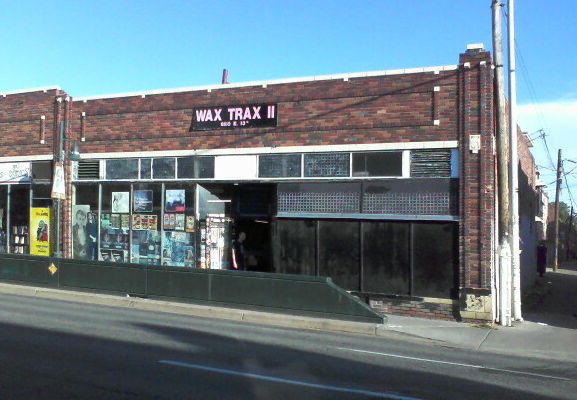
Melody Records - Chico, CA
If you ever find yourself in Chico - which is about halfway between Sacramento and Redding - I command you to go to Melody Records. You don't need the address, just go to downtown Chico and you'll find it. I would give a link to the website, but there isn't one. Somehow, the store has managed not only to stay open, but has maintained its old-school, incense-scented, record store ambience despite the ravages of time and fashion. The store has been in downtown Chico for at least twenty-five years - maybe even fifty. For all I know, Ray, the owner and proprietor, came out west during the gold rush in a covered wagon full of used records. I lived in Chico during the late 80's/early 90's and spent a great deal of time and money in the store. Back then, there were four record stores in the 3-block-long downtown Chico area. The students of Cal State Chico had a strong and long-standing tradition of selling their records and CD's for beer money. Since mp3's have no resale value, the other 3 stores have shut down. God only knows what those poor students of today are selling for beer.

Fifteen years after I moved away, Ray still remembers me. That's either really good customer service or gratitude that I spent enough money in his store to pay for his house and put his kids through college.
The store has moved a few times over the years, which is the best I can do to segue to some trivial knowledge I would like to share. The space that the store now occupies was once a live music venue called "The Whispering Clam." The first time I saw the Cadillac Tramps was in that room. As you can imagine, it was quite cozy. I also saw Royal Crown Revue there - twice. They played to an enthusiastic crowd of about 10 people and liked it so much that they came back a short time later and played for about 20.
Chico, don't be discouraged. The man he ain't so hard to understand.
For a while now I have been salivating to take classes via UCLA Extension. So I took the opportunity to do so this past summer when I came upon a class that I feel, was made for me . . . Music + Graphic Design. They knew I was coming . . . Here is a class representing my two loves. Music and Graphic Design. How grand is that! Through the years I have been able to design for bands/musicians: CD artwork, websites, logos, and flyers! And now I find a class that marries the two and I was in heaven.
The instructor has been doing art for bands for many years, working for Warner Bros. Records and then has been the designer for Wilco for many years. He brought in many colleagues that work in the industry from photographers, stylists, to managers. My fave was a former designer for Rhino Records. Very cool box sets like this one that were designed by him were amazing. He came in with like 3 duffle bags full for show and tell.
Our assignment was to take a band and carry them though from logo design to merch design.
The class kicked my butt. It was harder than I thought it was going to be. Maybe it was the band that I had chosen or not. Who knows. I know now I need to step up my game and think outside the box. Most of the folks in the class were in the design certificate program so their stuff was phenomenal. A lot of my design sense comes from DIY aesthetics and I get to think like what if I had a huge budget that I can take the design to the fullest and not think like there is no money!

Steve Earle last month at the Troubadour, performing an acoustic set in support of Townes, his tribute to Townes Van Zandt.